
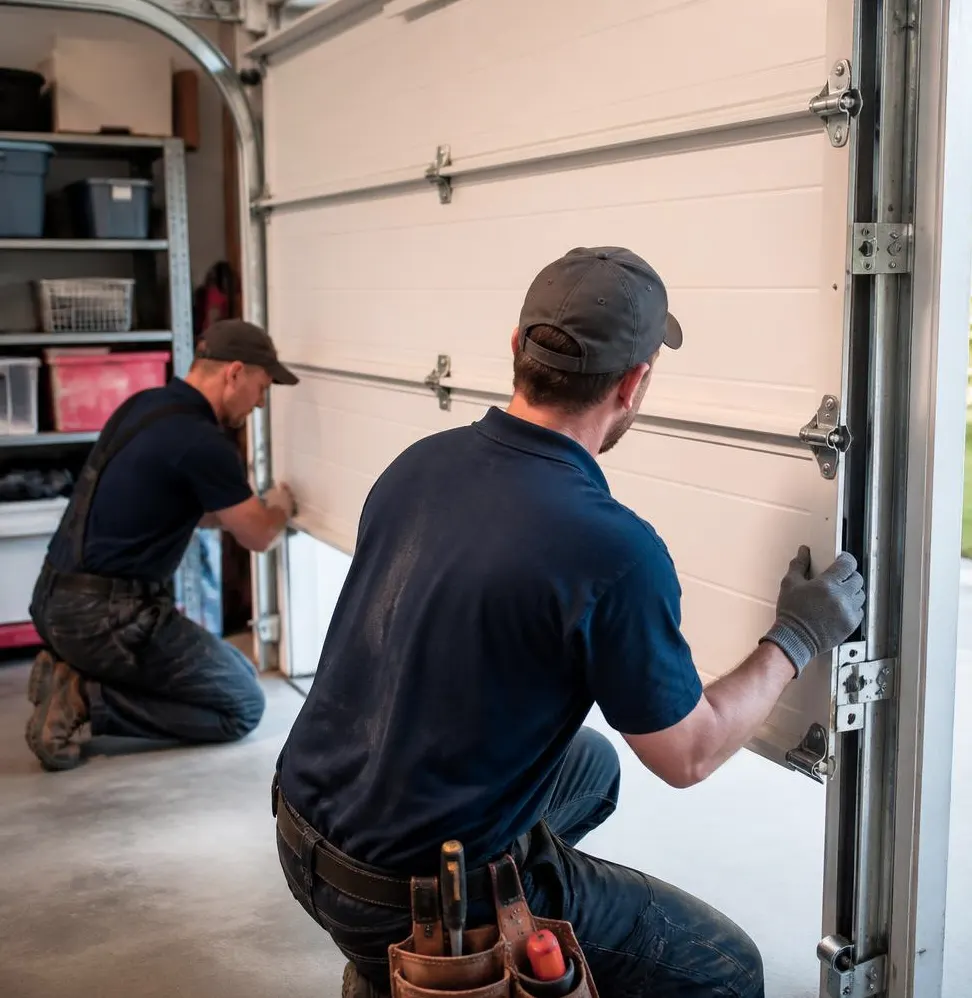
What a Tech Sees on These Calls
A typical call this time of year starts with "my door looks bowed" or "it popped open during the storm last night." The homeowner usually heard a loud bang, went out, and found the bottom two panels pushed inward, a bent track, or rollers that jumped the rail entirely. Sometimes the opener is fine but the door itself has a visible curve across the middle, like it took a punch. That curve is wind pressure, and it's more common here than people expect because this part of the valley sits in a wind corridor. The Delta breeze that cools things off on summer evenings turns into something much stronger when a winter storm system pulls through, and a standard residential door built for calm weather can take real damage.
Why the Garage Door Is a Home's Weakest Wall
Every other wall in a house is a solid, continuous structure tied into the frame. The garage door is a large panel of thin steel or aluminum, hung on a track, held shut by a motor that was designed to lift it, not to resist a wall of wind pushing against it. On an average two-car door, you're looking at well over a hundred square feet of surface area. When wind hits that surface, the force multiplies fast, and all of that pressure gets transferred to the track, the rollers, the hinges, and the springs. If any one of those components is already weak, worn, or slightly out of alignment, the door is the first thing in the house to fail. Once a garage door fails during a storm, wind can get inside the garage, pressurize the space, and start working on the roof from underneath, which is why building codes in high-wind regions require reinforced doors in the first place.
Check the Track and Rollers Before the Rain Starts
Walk the full length of both tracks with a flashlight. You're looking for dents, places where the rail has pulled slightly away from the wall bracket, and rust starting to form on the rollers from the last round of rain. Loose lag screws at the bracket are one of the most common failure points — tighten them, but don't overtighten into wood that's already stripped out; if a bracket spins instead of tightening, it needs a larger screw or a repositioned mounting point. Nylon rollers with sealed bearings hold up better in this climate than the old steel ones, which tend to dry out and bind during the dusty summer months and then seize up once the weather turns wet.
Weatherstripping and Bottom Seal
After a dry season full of dust and smoke haze, the rubber seal along the bottom of the door is often cracked, flattened, or pulling away from the track it sits in. This isn't just about keeping water out — a good seal also keeps wind-driven debris from getting underneath the door and prying it during a gust. Replace it if you can see daylight along the bottom edge or if it's stiff and cracking when you flex it.
Reinforcing the Door Itself
If your door is older or was never built with wind load in mind, a few upgrades make a real difference without a full replacement:
- Horizontal retrofit struts bolted across the back of the panels stiffen the door and spread wind pressure across the whole structure instead of letting it concentrate in the middle.
- Heavier gauge hinges at the panel joints reduce flex, which is usually where the bowing starts.
- A wind-rated opener bracket keeps the top panel from separating from the track under pressure, which is a common failure point on older installs.
These are trade-offs worth weighing against a full installation. If the door is more than fifteen years old and already shows wear on multiple fronts — worn rollers, faded or cracked panels, an opener that struggles — reinforcing it may just be a stopgap before a proper garage door installation makes more sense.
Springs, Balance, and the Opener
A door that's out of balance puts extra strain on everything else when wind adds to the load. Disconnect the opener and lift the door by hand halfway — it should stay in place on its own. If it drifts up or crashes down, the springs are worn or improperly tensioned, and that's not a DIY adjustment; torsion springs carry enough stored force to cause serious injury. Also check that your opener has a working manual release and, if outages are a concern during a winter storm, consider a battery backup unit so the door can still be opened and closed by hand or by motor if the power goes out mid-storm.
Clear the Perimeter
Before a storm system moves through, take a few minutes to clear anything near the door that could become a projectile — trash cans, loose panels, yard equipment leaning against the garage wall. Wind-driven debris denting a door panel is one of the more avoidable repair calls this season brings.
When to Call Lathrop Garage Door
If you've already got a bowed panel, a track pulled away from the wall, or a door that won't stay balanced, don't wait for the next storm to make it worse. Lathrop Garage Door handles both garage door repair and spring replacement for exactly this kind of wind damage, and we can assess whether reinforcement is enough or whether a replacement door built for better wind resistance is the smarter long-term call. If your opener failed during an outage or isn't gripping the track securely anymore, our opener repair and installation service covers that too. We also offer emergency garage door service for doors that won't close at all after a storm, which matters when an open garage is the only thing standing between your home and the weather.
If you're in Lathrop, Manteca, Tracy, Stockton, Ripon, Escalon, French Camp, or Mountain House and want your garage door checked before the next storm rolls through, call Lathrop Garage Door today and get it handled right.